BerewoodPrimary School
Religious Education
Intent
At Berewood Primary School, the intention of our RE curriculum is to help children gain knowledge and understanding of a range of different religions. By the end of their primary journey, pupils will have explored four major world faiths: Christianity, Hinduism, Islam and Judaism.
Through our carefully designed Religious Education curriculum, we aim to support every pupil in developing spiritually, academically, emotionally and morally. We want children to understand themselves more deeply, appreciate the beliefs and values of others, and grow into thoughtful, respectful young people who can navigate life in a diverse, ever‑changing world.
How we teach RE (Implementation)
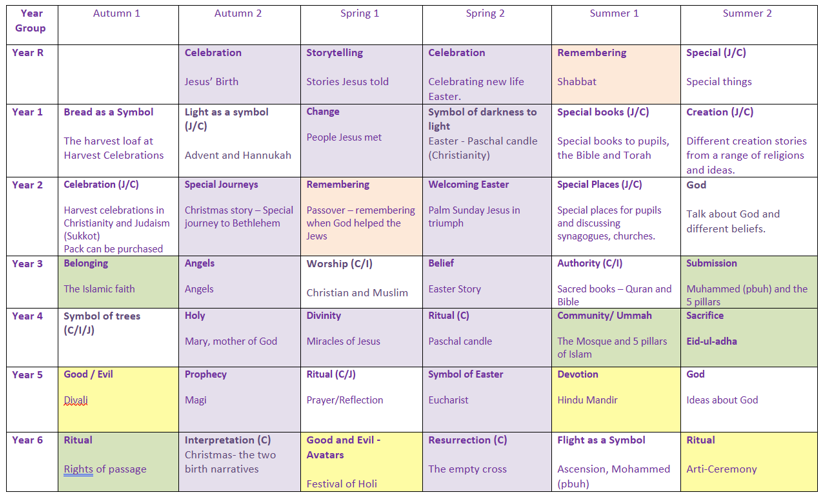
At Berewood, the RE curriculum is taught using the Living Difference Agreed Syllabus, which is mapped across the whole school. The Progression of Skills outlines the concepts and themes taught in each year group, ensuring that children experience a rich and balanced curriculum.
Through the Living Difference approach, pupils are introduced to different ways of seeing and understanding the world, learning how religious ideas and practices influence people’s lives. The curriculum is carefully sequenced so that key skills, ideas and vocabulary are revisited and built upon year after year. This supports children in developing deeper thinking around each concept and strengthens their understanding of how beliefs shape actions.
Children are taught specific enquiry skills, which help them explore and make sense of religious and non‑religious worldviews in a structured, thoughtful way.
Enquiry Skills: Communicate, Apply, Enquire, Contextualise and Evaluate.
Impact
By the time children leave Berewood Primary, they will have built strong enquiry skills that help them think carefully about big questions in RE. They will understand key ideas from different religions and worldviews, and will remember important facts and stories that they have learned along the way. This means they will be well-prepared for the next stage of their learning—both in our school and when they move on to secondary education.
Children will also leave with a greater awareness of the world’s religions and an understanding that people have different beliefs, values and ways of seeing life. They will start to recognise how they themselves respond to important ideas that affect everyone, no matter what religion they belong to.
Their RE lessons will help them appreciate the cultural diversity around them and understand how different beliefs influence people’s lives today. Most importantly, pupils will begin to see what a religious way of looking at the world might offer—both for individuals and for communities—and how it might guide people in how they live, act and care for others.
Parents and carers have the right to withdraw their child from all or some parts of Religious Education. If you wish to withdraw your child, please contact the headteacher via the office: office@berewoodprimary.chimat.uk